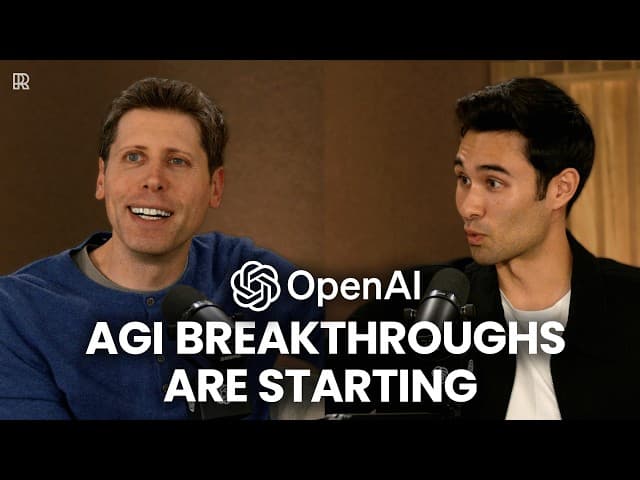
Interview with Bastian Lehmann
Co-founder and former CEO of Postmates
by 20VC with Harry Stebbings • 2024-04-08

In a candid and revealing conversation on 20VC, Bastian Lehmann, the visionary founder behind Postmates, pulled back the curtain on a decade of relentless ambition, a landmark acquisition, and an unyielding commitment to building. From his German childhood escapades with dial-up modems to orchestrating a multi-billion dollar exit and embarking on his next venture, Lehmann’s story is a masterclass in grit, strategic defiance, and a refreshingly unfiltered perspective on the tech world.
From German Roots to Tech Rebel
Bastian Lehmann's journey begins not in Silicon Valley, but in a Germany he jokingly describes as "black and white" in 1980. From a young age, he was insatiably curious, always "onto something," often found playing in the forest or orchestrating neighborhood exhibitions. He attributes his success less to luck and more to an unwavering belief in "determination and grit and hard work." A pivotal "needle moving moment" was his lifelong dream of moving to the US, fueled by an early obsession with computers.
Growing up in a modest household where his mother sometimes worked three jobs, Lehmann's early tech adventures led to exorbitant dial-up bills, a stark contrast to their limited finances. In a truly wild anecdote, he recounts how a connection made on a local bulletin board system (BBS) taught him to effectively embezzle AT&T and MCI by acquiring US calling card numbers and PINs from unsuspecting Americans. This audacious "hacking" not only gave him free internet access but foreshadowed a resourcefulness that would define his entrepreneurial career. The impact of his parents' divorce at six years old and witnessing his mother's immense struggle – like cleaning buildings at dawn just to make ends meet – forged a deep-seated ambition. He vividly remembers telling himself at 14, "I will make so much money that my mom can have whatever she wants," a vow that became a powerful, driving force.
Key Learnings:
- Grit and determination are cultivated through early challenges and a refusal to give up.
- Resourcefulness, even if unconventional, can be a foundational entrepreneurial trait.
- Personal vows and familial support can serve as powerful motivators for long-term ambition.
Postmates: The Wartime Grind & The Art of the Deal
Lehmann describes Postmates' decade-long existence as a continuous "Wartime mode," an environment he not only endured but "enjoyed tremendously" because it truly measured his capabilities. His former colleague Nabil characterized him as "not a cuddly CEO," a testament to the intense focus required to navigate the fiercely competitive on-demand delivery market. The Postmates team, he insists, was bound by an almost "church-like community," driven by a shared mission and a profound love for the company. "Everybody who worked at Postmates loved that company from the bottom of their heart," he recalls, highlighting a unity that made them impervious to external pressures from competitors, funding rounds, or rumors.
Despite facing competitors raising "bigger and bigger funding rounds," Lehmann maintains that Postmates and other key players in the space had "pretty sound" fundamentals, with clear paths to profitability in scaled markets. He dismisses the misconception that these were inherently "bad business models," stating, "Every market that you had at scale was profitable for us." The true battleground, he explains, was an inflection point where "the only thing that mattered was more Capital to do more advertising." This necessitated constant fundraising, a process where "every single round" felt hard. When the time came for the Uber acquisition, Lehmann clarifies that Postmates was far from desperate. "We had just under $100 million left in cash and our negative gross profit margin was I think single digits two or three quarters later we were profitable as a company." They were even preparing for an IPO. The decision to sell was a pragmatic one: while he yearned to be the CEO of a publicly traded company, he believed the market needed to consolidate and that Postmates had reached "the furthest that we could have moved the company" as a standalone entity.
Key Practices:
- Cultivate a deep-seated mission and community within the company to foster resilience against external pressures.
- Maintain strong unit economics and a clear path to profitability, even in highly competitive, capital-intensive markets.
- Prioritize strategic alignment (like market consolidation) over ego when making critical exit decisions.
The Uber Deal: A $2.65BN Reported Deal That Turned Into $5BN
The Uber acquisition, publicly reported at $2.65 billion, holds a more intricate story. Lehmann recounts the initial call from Uber CEO Dara Khosrowshahi: "Do you want to discuss merging the companies? And I said yeah, let's do it." After preliminary talks a year and a half prior, the timing was now right. With Uber's rides business impacted by COVID, their focus on Uber Eats intensified, making Postmates' strong market position, particularly in California, highly attractive for consolidation.
Lehmann's negotiation strategy for Postmates was masterfully executed. Instead of solely pushing for a higher upfront paper price, he prioritized two critical elements: "no breakup absolutely no way out and no color on the deal." This last point proved prescient. While the announced price was $2.65 billion, Uber's share price surged between the signing of the deal (around $31) and its closing (around $53-$55). As a result, the money returned to shareholders ultimately totaled "almost $5 billion." Lehmann proudly states, "I have sold almost none of my shares," continuing to root for Uber. The entire process, from signing to receiving the funds, took nearly a year, making the actual moment of financial realization "very anti-climactic." The one profound regret was the inability to celebrate this decade-long journey with his 2,000 employees due to COVID. It was "a very strange end to like a 10-year sort of almost church-like community."
Key Insights:
- Strategic deal terms (like "no collar") can yield significantly higher returns than initial announced figures.
- Prioritize deal certainty and long-term value creation over short-term paper valuations.
- Mergers and acquisitions are complex, lengthy processes that require sustained operational focus until final closure.
Unfiltered Takes: VCs, AI, and the Future of Tech
Post-acquisition, Lehmann initially tried "to do nothing" but quickly realized his passion lay in building. Investing, he found, "does not derive me the same amount of joy" as actively creating products and running teams. As a second-time founder who has returned capital, he enjoys significant advantages for his new company, Tiptop: "it's very easy to raise money, you can select the people that you want to work with." He chose to work with his hero, Marc Andreessen, who he’d pitched five times unsuccessfully for Postmates, and now found himself being courted by the legendary VC. Andreessen's simple conviction — "if you want to do it again... I'm sure you figure something out" — led to a Series A with no complex negotiations. Lehmann, however, remains wary of raising "too much too soon," an ongoing concern that he counters with a disciplined approach to testing hypotheses and pivoting if necessary.
Lehmann's candid views extend to the venture capital world. He revises his previous statement of "99% of VCs are idiots" to "99% are sheep," describing them as largely self-informed echo chambers that resist bold, unconventional thinking. He strongly believes the "best VCS in the world are humble enough to realize that they're not going to change the outcome" of a company. He recounts a conversation with Bryan Singerman, who told him he'd be a bad VC because "you care too much... you believe that you can change things," whereas true investors understand there's "very little you can do to actually move the needle other than writing the check and then in the best case you stay out of the way." His advice to founders: if you feel like you have to constantly "convince someone to really work hard on your space or to convince someone walk away."
Finally, Lehmann shares his "hot take" on AI: he believes "the phone is dead" and foresees the rise of a "new type of computer that we may see in every home." This device, designed purely for inference on a chip, wouldn't have a screen but would power a personal AI, running on open-source models with individual weights and preferences. He argues this is crucial for cost-effectiveness and localized, real-time inference, drawing parallels to the shift from mainframes to personal computers. He believes Apple is "caught in sort of the inventor's dilemma" as AI has moved too fast for their current hardware paradigm.
Key Insights:
- Second-time founders with successful exits gain significant leverage in fundraising and team building.
- The best VCs provide capital and stay out of the way, understanding their limited influence on operational outcomes.
- Founders should seek investors who inherently believe in their vision, rather than those who require constant convincing.
- The future of AI may lie in dedicated, personal inference computers in the home, moving beyond current device limitations.
"Most companies fail because the founders give up and we refuse to give up." - Bastian Lehmann