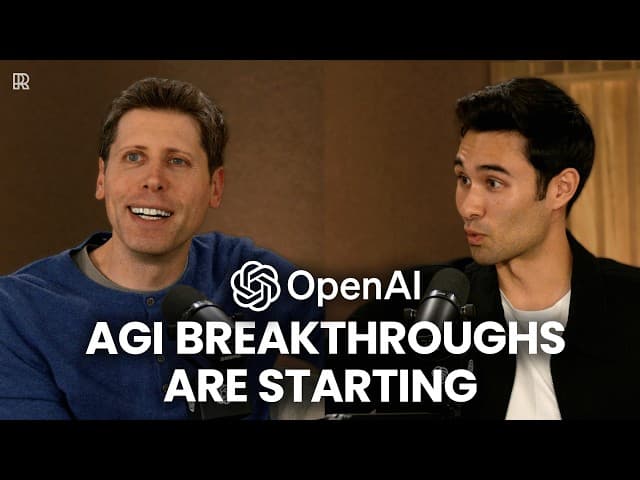
Interview with Derek Sivers
Author and entrepreneur
by Tim Ferriss • 2023-04-21

In a cozy corner of Wellington, New Zealand, over sips of Scotch and Go Go Goa Black tea, Tim Ferriss and Derek Sivers embarked on a conversation that felt less like an interview and more like eavesdropping on two brilliant minds. What unfolded was a deep dive into Sivers's distinctive approach to life, business, and technology – a philosophy steeped in intentionality, radical self-reliance, and a surprisingly fluid sense of identity. Ferriss, ever the insightful interviewer, guided Sivers through a series of anecdotes and revelations that left listeners reconsidering their own choices and assumptions.
The Philosophy of "Enough": Embracing Deliberate Minimalism
From the moment the microphones clicked on, Sivers’s commitment to minimalism shone through. Ferriss, with a knowing grin, highlighted Sivers’s household inventory: "If you were to walk into Derek’s kitchen, you would find a wide assortment of glasses, namely one other glass. There are only three glasses." Sivers, unruffled, added, "And this is my only pair of pants." This wasn't austerity for its own sake, but a profound commitment to what truly serves, stripping away the excess that often paralyzes choice.
This intentional reduction of options extends beyond physical possessions. Sivers also shared his deliberate approach to professional attire, entrusting the expert tailors at Michael Browne in London to dress him. Instead of sifting through countless suits, he simply asked, "You’re the expert. You know, just dress me." This delegation of choice, especially in areas where he lacked expertise or strong preference, highlighted his philosophy of being a "satisficer" rather than a "maximizer." The conversation circled back to a powerful idea Ferriss had encountered in Kevin Kelly's "Excellent Advice for Living": "You know how you have that bad pen? Throw out the bad pen.” Sivers wholeheartedly agreed, adding a layer of self-respect to the act: "It’s about self-respect, isn’t it? Even something as simple as a pen. When I’ve done that, I went, 'I’m better than this. I’m not going to take this. This pen is not going to rule over me any longer.'”
Key Practices:
- Radical Resourcefulness: Living with only what is truly needed and functional (e.g., three glasses, one pair of pants, two suits).
- Delegating Choice to Experts: When a decision isn't a core value or passion, Sivers defers to trusted experts to reduce decision fatigue.
- Eliminating "Bad Pens": Removing anything that doesn't meet a minimum standard of quality or utility, viewing it as an act of self-respect.
Redefining Identity: The Involuntary Shifts of Life
One of the most profound segments of the interview revolved around a dramatic scuba diving experience in Iceland that fundamentally reshaped Sivers's understanding of identity and empathy. Initially, he approached the dive with confidence, but the claustrophobia of the dry suit and the cold, dark ocean depths triggered an unexpected panic attack. He tapped his instructor, surfaced, and declared, “I don’t want to. I’m just going to go. You guys go ahead. I’m going to wait on the side.” His instructor, with remarkable calm, talked him down, encouraging him to "just relax for a second. It’s all right."
The next day, on his first certified dive, Sivers found himself witnessing a German diver in the exact same panicked state he had been in. Without hesitation, he imitated his instructor's calm reassurance, guiding her to the surface and helping her calm down. This experience led to a powerful revelation: "I have no respect for people who have panic attacks! ...But I had just panicked and it was involuntary." He realized he had unfairly categorized people — the "depressed," "fat," or "addict" — thinking, "I would never be those things. I’m not that kind of person." Yet, just like becoming a "panic attack person," one could also involuntarily step into categories with positive connotations, like "hero" or "rescuer," simply by acting with presence and imitation.
Key Learnings:
- Fluidity of Identity: Recognizing that identities, both positive and negative (e.g., "panic attack person," "hero"), can be involuntary and temporary.
- Empathy Through Experience: Acknowledging that categorizing people (e.g., "addict," "depressed") is often unfair, as circumstances and involuntary shifts can place anyone in those categories.
- The Power of Imitation: Deliberately stepping into desired roles (like a rescuer) by recalling and imitating positive examples.
The Evolving Self and Your "People Compass"
Sivers continued this exploration of identity by discussing how he views his own labels, not as fixed states, but as temporary preferences or achievements that require continuous earning. When his son declares, "I hate tomatoes," Sivers corrects him: "today." This simple addition leaves room for future change, as evidenced when his son later embraced olives, a food Sivers himself despises. Sivers noted, "I love that switching between identities."
He then applied this to his own professional identity. After years of being known as an entrepreneur, he realized the label felt "expired." He began to see himself as a writer, a shift guided by what he calls his "people compass." "So ultimately we want to be our ideal selves, right? And that your heroes are your idealized self, right? That’s why we idolize certain people, is we want to be like them. So that reveals what your values are." By looking to his admired authors, he understood his true calling. This "people compass" also guides his entrepreneurial instincts: choose to serve people you genuinely love being around. He mused about his next venture, "100-year hosting — legacy personal websites," a service designed for the "kind of people that enjoy technology for its own sake," people he would be "proud to serve," even if it didn't pay much.
Key Changes:
- Temporary Labels: Viewing self-assigned labels (e.g., "entrepreneur," "musician") as expiring titles that must be continually earned.
- "People Compass" for Direction: Using admiration for others to reveal personal values and guide life and business choices.
- Customer-Centric Entrepreneurship: Prioritizing serving people one genuinely enjoys, even over maximizing profit.
Reclaiming Digital Autonomy: The Case for Self-Reliance in Tech
Perhaps the most radical departure from conventional wisdom came when Sivers made his impassioned case for "tech independence" and "escaping the cloud." He painted the "cloud" as a "clown," highlighting the dangers of dependency with a chilling anecdote: a tech-savvy friend lost ten years of his child's photos from Google Photos after a mistaken account merge. "He has no photos of his kid from age 0 to 10 because he trusted the clown," Sivers lamented.
His solution? Building your own digital infrastructure. He demystified the process, suggesting a $5/month virtual private server or even an old laptop running OpenBSD – a "super simple" and "secure as hell" operating system with few lines of code. He outlined steps like using SSH keys for secure login, setting up a firewall, and acquiring a domain name from reputable, "nerdy" registrars. For essential services, he recommended open-source alternatives like Radicale for contacts and calendars, and rsync or Syncthing for file synchronization. Sivers stressed the importance of knowing "that my contacts aren’t being sent to other people, and then you see it backed up yourself." He even urged listeners to avoid common platforms like WordPress, not because they are inherently bad, but because their complexity can intimidate people from learning the simple HTML fundamentals that grant true understanding and control. "It’s about being dependent! It’s about the self-reliance!" he passionately declared.
Key Practices:
- Personal Server Ownership: Setting up a $5/month virtual private server or dedicated hardware for total control over data.
- Open-Source Security: Utilizing secure operating systems like OpenBSD, SSH keys, and firewalls to protect personal data.
- Decentralized Data Management: Using tools like Radicale for contacts/calendars and rsync/Syncthing for file synchronization to avoid reliance on corporate cloud services.
- Understanding Fundamentals: Learning basic HTML to build personal websites, rather than relying solely on complex, feature-heavy platforms.
Derek Sivers, in his candid conversation with Tim Ferriss, offered a compelling vision of a life lived with deliberate intention. From the few possessions in his kitchen to the intricate setup of his digital life, every choice is a testament to autonomy, curiosity, and a profound respect for personal agency.
"I just think about having enough." - Derek Sivers